
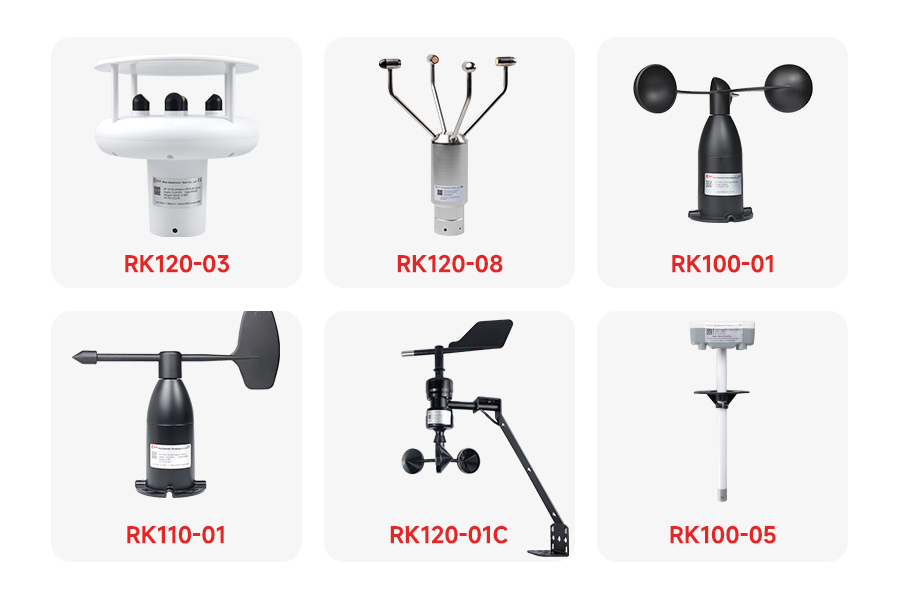
Wind speed is a critical parameter in weather forecasting, environmental monitoring, renewable energy management, and various industrial applications. Accurately measuring airflow helps meteorologists predict storms, allows wind farm operators to optimize energy production, and ensures safe operation in construction, aviation, and marine environments. A Wind Speed Sensor is the primary instrument used to monitor airflow, providing precise, real-time measurements that inform decision-making across multiple industries.
A Wind Speed Sensor detects the velocity of moving air and converts it into measurable data that can be analyzed and recorded. Modern sensors are designed for accuracy, durability, and integration with automated systems. Devices such as the Wind Speed Sensor from Rika Sensor deliver reliable readings under a range of environmental conditions. These sensors play a vital role in both operational applications and scientific research, offering real-time monitoring, long-term data logging, and predictive analysis. By capturing airflow characteristics consistently, wind speed sensors contribute to safety, efficiency, and environmental understanding.
Types of Wind Speed Sensors
Cup Anemometers
Cup anemometers are one of the most common types of wind speed sensors. They consist of three or four cups mounted on horizontal arms that rotate around a vertical axis. As wind blows, the cups spin, and the rotational speed is proportional to wind velocity. The mechanical rotation is converted into an electrical signal, which is then processed to determine wind speed. Cup anemometers are highly reliable for outdoor applications and are widely used in meteorological stations and renewable energy projects.
Vane Anemometers
Vane anemometers combine a rotating propeller with a directional vane to measure both wind speed and direction. The propeller rotates as wind passes through it, and the rotation rate is converted into velocity data. The attached vane ensures that the sensor aligns with the wind, providing accurate directional readings. Vane anemometers are commonly used in HVAC systems, wind resource assessments, and environmental monitoring.
Hot-Wire Anemometers
Hot-wire anemometers use a heated wire to measure wind speed based on cooling effects. As air flows past the wire, it carries away heat, changing the wire’s electrical resistance. The rate of cooling is proportional to wind velocity, allowing precise airflow measurement. These sensors are particularly useful in laboratory studies, industrial ventilation monitoring, and applications requiring detection of very low wind speeds.
Ultrasonic Anemometers
Ultrasonic anemometers utilize ultrasonic sound waves to measure wind speed and direction without moving parts. The sensor emits ultrasonic pulses between transducers, and the time it takes for the pulses to travel is affected by airflow. By measuring these time differences, the sensor calculates both velocity and direction. Ultrasonic anemometers are highly accurate, responsive, and suitable for harsh environments, including research stations and offshore wind farms.
Applications of Wind Speed Sensors
Meteorology and Weather Forecasting
Wind speed sensors provide essential data for weather forecasting, storm prediction, and climate studies. Real-time wind velocity measurements help meteorologists monitor changes in weather patterns, track storms, and issue warnings for extreme conditions. Continuous data collection from multiple sensors contributes to more accurate predictive models and better understanding of local and regional climate trends.
Renewable Energy
Wind farms rely on precise wind speed measurements to optimize turbine performance and maximize energy production. By monitoring airflow, operators can adjust turbine blade angles, anticipate mechanical stress, and schedule maintenance proactively. Accurate wind data also assists in determining the best locations for new wind energy projects.
Aviation and Marine Safety
Airflow monitoring is critical in aviation and maritime industries to ensure safe operations. Wind speed sensors at airports and on ships provide real-time data to pilots and navigators, helping them adjust flight paths, docking procedures, and vessel stability measures. Sudden gusts or high wind conditions can be identified early, reducing the risk of accidents.
Industrial and Environmental Applications
Industries that require precise airflow control, such as HVAC systems, mining operations, and chemical plants, use wind speed sensors to maintain safe and efficient environments. Environmental researchers also use these sensors to study wind patterns, pollution dispersion, and ecosystem interactions. Long-term data collection supports urban planning, renewable energy assessments, and disaster preparedness.
Installation and Maintenance Considerations
To ensure accurate readings, wind speed sensors should be installed in unobstructed locations away from buildings, trees, and other structures that could create turbulence. Proper height and alignment are essential to capture representative wind conditions. Maintenance includes regular inspection for debris, corrosion, or mechanical wear, particularly for sensors with moving parts. Calibration against reference instruments ensures continued measurement accuracy.
Conclusion
A Wind Speed Sensor is an indispensable tool for measuring airflow in meteorology, renewable energy, aviation, and industrial applications. By providing accurate, real-time data, these sensors enable better decision-making, improved safety, and optimized operational efficiency. Whether using cup, vane, hot-wire, or ultrasonic technology, wind speed sensors play a vital role in understanding wind behavior, supporting research, and maximizing the performance of wind-dependent systems. Regular maintenance, proper installation, and periodic calibration are key to ensuring these sensors deliver precise and reliable measurements over time.
About the Author