
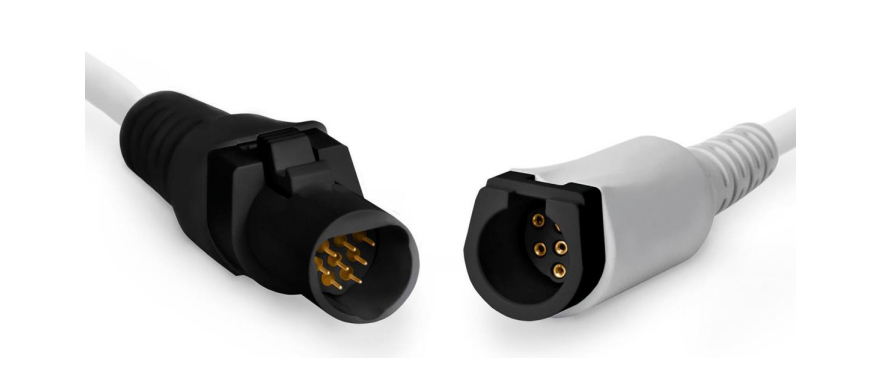
Medical devices rely on precise and reliable electrical connections to ensure accurate performance, patient safety, and efficient operation. The design of connectors, including their configurations and pin arrangements, plays a critical role in achieving these objectives. Proper connector selection affects signal transmission, power delivery, and overall device functionality. In medical applications, where accuracy and reliability are paramount, understanding connector configurations and pin layouts is essential for engineers and device designers.
High-quality medical electrical connectors are designed to accommodate a wide range of device requirements, from simple power delivery to high-speed data transmission. The configuration and number of pins in a connector determine how many circuits it can support, the type of signals it can carry, and how it interfaces with other components. Medical devices such as patient monitors, imaging equipment, infusion pumps, and surgical instruments depend on connectors that are both compact and capable of handling multiple signals or power lines simultaneously.
Common Connector Configurations
Connector configurations in medical devices vary widely depending on the device’s function and electrical requirements. Some of the most common configurations include:
Circular Connectors
Circular connectors are widely used in medical applications due to their durability, compact size, and ease of alignment. These connectors have a cylindrical shape, which provides secure mating and reduces the risk of accidental disconnection. Circular connectors often support multiple pins and can carry power, signals, and even high-frequency data. They are commonly used in imaging equipment, patient monitoring systems, and surgical instruments.
Rectangular and Board-to-Board Connectors
Rectangular connectors and board-to-board connectors are used when multiple circuits need to be organized in a compact layout. Board-to-board connectors connect printed circuit boards directly, allowing for efficient internal wiring of medical devices. Rectangular connectors are often used in diagnostic equipment and laboratory analyzers, where high-density connections and precise alignment are required.
Wire-to-Board Connectors
Wire-to-board connectors provide a reliable connection between cables and circuit boards. They are particularly useful in modular devices where internal wiring must connect to external systems or accessories. These connectors are commonly found in infusion pumps, wearable monitoring devices, and portable diagnostic equipment.
Pin Arrangements and Their Importance
The arrangement of pins within a connector is critical for ensuring correct signal routing and minimizing interference. Pin arrangements are typically designed to separate power lines from signal lines, reduce crosstalk, and maintain signal integrity. Common arrangements include linear rows, circular patterns, and staggered layouts, each optimized for specific electrical and mechanical requirements.
Pin density is also a consideration in medical device design. High-density connectors can accommodate more circuits in a smaller space, which is particularly important in compact or portable devices. However, higher pin density may require stricter tolerances and more precise manufacturing to prevent misalignment or electrical shorts.
Keying and Polarization
Medical connectors often incorporate keying and polarization features to prevent incorrect mating. Keying ensures that connectors can only be inserted in the correct orientation, while polarization may prevent connections to incompatible devices. These features reduce the risk of electrical faults and device malfunction, enhancing safety in critical medical applications.
Specialized Configurations for High-Performance Applications
Certain medical devices require connectors that support specialized configurations for high-speed data or high-power transmission. For example, coaxial connectors are designed to carry high-frequency signals with minimal interference and signal loss. USB and other data connectors in medical devices allow rapid communication with computers, data storage systems, or telemedicine platforms.
Hybrid connectors combine power, signal, and data lines in a single interface, reducing the number of individual connections and simplifying device design. These connectors are increasingly used in modern medical technology where compactness and versatility are essential.
Considerations for Connector Selection
When selecting a connector for a medical device, it is essential to consider the device’s electrical requirements, environmental conditions, and regulatory compliance. Factors such as the number of pins, pin arrangement, connector size, and mechanical robustness should be matched to the device’s function and expected operating conditions. Compliance with standards such as ISO 13485 and IEC 60601 ensures that connectors meet safety and reliability requirements for medical applications.
Conclusion
Connector configurations and pin arrangements are fundamental to the reliable operation of medical devices. Circular, rectangular, board-to-board, and wire-to-board connectors provide diverse options for power and signal transmission, while pin arrangements and keying features ensure accuracy, prevent misalignment, and maintain signal integrity. Understanding these aspects of medical electrical connectors allows engineers and medical device designers to create devices that are safe, reliable, and efficient. Proper connector selection not only enhances device performance but also supports patient safety and contributes to the overall quality of healthcare delivery.
About the Author